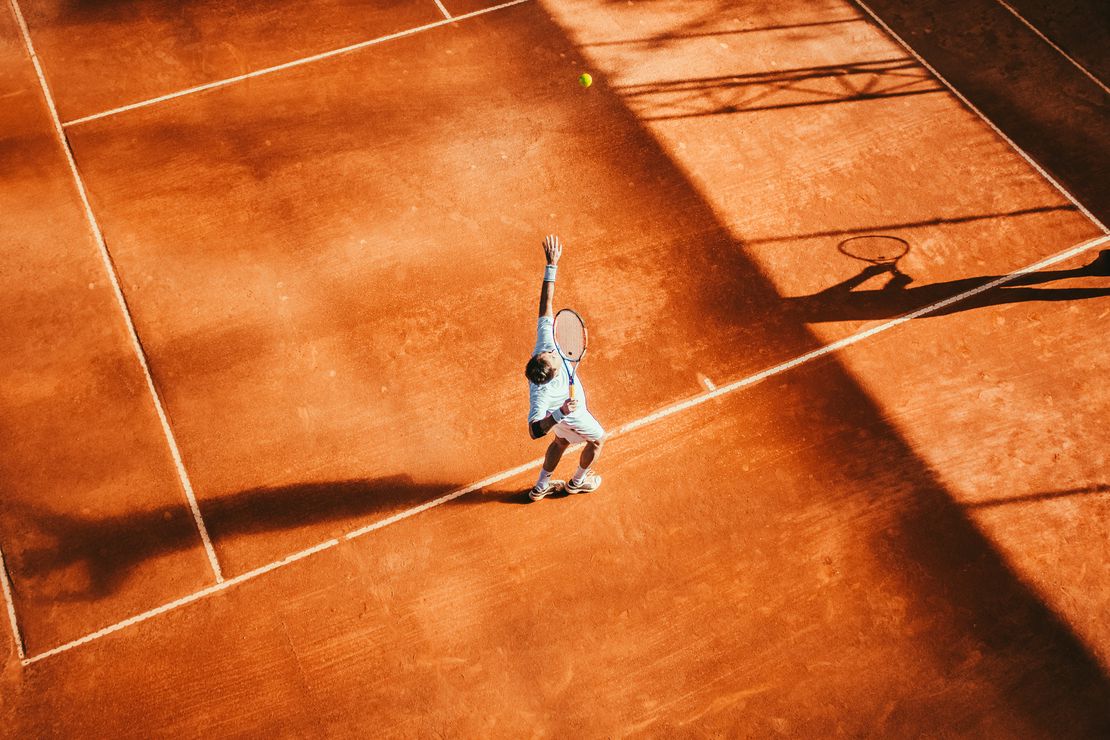
Be a "Lazy" Coach
Table of Contents
The Motivation
This term, I have decided to be a “lazy” coach, as in, I really don’t want to repeat myself over and over and over and over and over … again, and I have fully embraced the philosophy of “Let the drill teach the players”
The Method
In the coaching world, there’s a famous saying.
A lazy coach is a good coach
Every coach has their own interpretations. To me, if I were to teach people who never played tennis before, I definitely cannot be lazy. I need to explain and demonstrate the fundamentals, then hand-feed balls and provide timely feedback iteratively.
I start to embrace the lazy coach persona when players can hit a bit.
Before this term, when I train players, I often
go through the drill briefly
demonstrate if needed
talk through focus points, how-tos
start drill
Now, I often just
go through the drill briefly
demonstrate if needed
start drill
talk through focus points, how-tos if needed
Yes, I just change the order of point 3 and 4 but hear me out, it has made significant difference in my coaching. And I have tested the effectiveness of my approach across 4 groups of players with basic basic groundstroke and rally capabilities:
- orange ball level 2 - 6 players ( 7 - 10 years old, 3 boys 3 girls)
- green ball level 2 - 6 players (9+ years old, 1 girl, 5 boys )
- adult beginner A - 11 players (20 - 50 years old, 5 men 6 women)
- adult beginner B - 10 players (20 - 50 years old, 3 men, 7 women)
In the drill, I simply asked the players to hit 2 racquet-fed balls: 1 cross court and 1 down the line. We start with 2 forehands and then after a basket of balls, we switch to 2 backhands.
With the orange and green level 2 players, I didn’t divide them into experiment and control group as the sample is not big enough, however, I was able to do so with adult players.
The Results
Orange Ballers
2 out of the 6 players figured out how to hit forehand and backhand consistently (here consistently means at least 80% of the time) with required direction. For the rest, 2 can hit to the required direction half of the time and the last 2 seemed to be struggling.
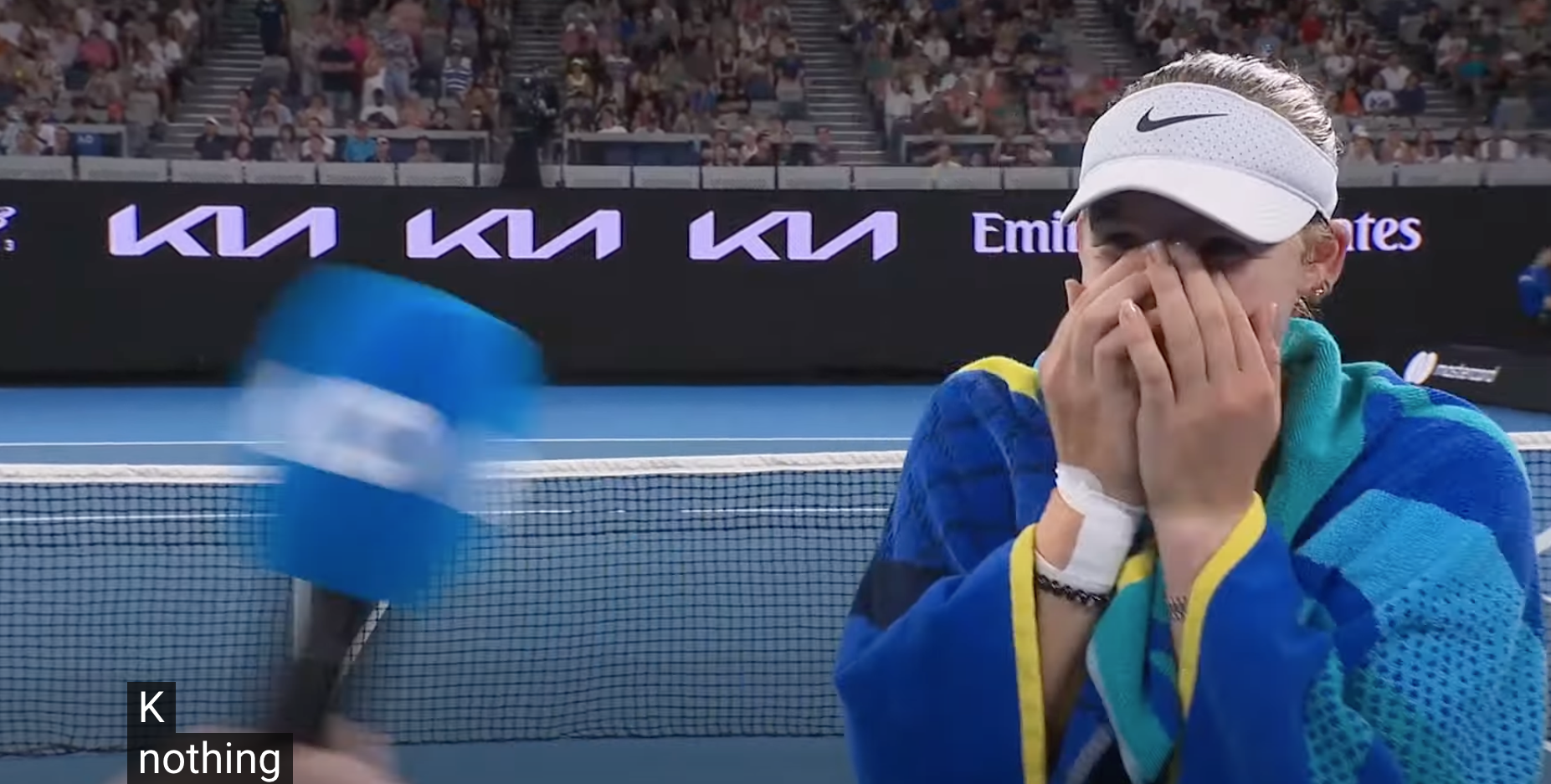
I then asked the 2 players (a boy and a girl) who figured out the “secret” to do a demonstration while the rest 4 players observed. I then asked them about their findings, and the answer seems to be… nothing… 😂 (They just looked at me with their innocent eyes without saying a word… CPU overheating …🚨)
I then, explained and demonstrated how to hit forehand and backhand cross court and down the line, we did another 2 baskets and I can see that the 4 kids started to get it.
Green ballers
4 out of 6 green ballers figured out how to hit forehand and backhand consistently with required direction.
I then, asked the 4 players to do a different drill focusing on rallying cross court and freed myself to help the 2 players who need more guidance on how to control the ball direction.
Adult Players (Yellow Ballers)
With adult players, I did something different. I had a control group and experiment group. Most of them can hit down the line rallies within the service boxes (Thanks to Coach LJ’s Co-op drill). So I updated the drill to focus purely on hitting cross-court.
With the control group I did what I have done before. I explained how to hit cross court, then I started the drill. With the experiment group, I simply asked them to start hitting cross court without any explanation. Most players, I mean 4 out of 5 players in the experiment group would have figured out the “secret” of hitting cross court before I finish feeding a basket of balls (around 50 - 60 balls). Of course, I watched them fail over and over and over and over and over… but eventually, they figured out the secret. It is not about the swing or the power, it’s the position along with body (especially shoulder) rotation. The ITF Technique Development In Tennis Stroke Production Manual call this process: implicit skill acquisition. I firmly believe that us coaches do not need to teach everything explicitly. Sometimes, implicit teaching is better.
In the control group? it’s about the same. Even after explaining and showing how to hit cross court, some people just need a bit of more time and a bit more individualized coaching as one size does not fit all.
Side note: I noticed that some players have a slower time making connections from their mind to their body. (I call it slow neural-musculoskeletal translation. Not sure if it’s a thing or a term.) They understand what the coach has said but it takes them more time to process and feel the strokes with hands-on help than their peers. I will do some digging and write another blog later on.
The Conclusion
I know my sample size is small and I missed out the teen group in the age range. (I deliberately skipped red ballers because I think they are too young and needs more hands-on approaches) However, based on what I have observed so far. This method has some merits and validity to it.
- As a coach, it is unavoidable to repeat oneself. However, I think with this method, I can repeat myself with more intention and purpose. I can quickly filter out which players need more help with certain drills or technical focus and which players are ready to progress. With that knowledge, I can update my sessions accordingly. (I call it dynamic planning 😉)
- Thinking and problem solving independently is an essential skill to learn for any player regardless of age. Tennis is an individual sport. Players need to be able to handle some challenges and difficulties on the court by themselves. Better start with practice courts than tournament courts.
- For players who figured it out by themselves, it builds their confidence and the skill and knowledge would stick with them forever.
- For players who didn’t, the knowledge will stick with them longer and deeper in their memory. Remember when we were in school trying to figure out a math problem but couldn’t, then the teacher gave us some hint and we had the eureka moment? I love those moments!
Looking Forward
Orange ball group has the lowest success rate of figuring things out independently. Potentially there are many factors in play: maybe they are too young and their cognitive development is not there yet, maybe the sample size is too small and I need to do more testing with different orange ball groups, maybe the distribution of the sample group is off, i.e. I had too many players with slow neural-musculoskeletal translation, etc. I am keen to figure it out and report back.
I would like to do more testing on green ball level 2 as well due to small sample size.
With teenager group, it is hard for me to find groups with players of similar calibres to do the test but if the opportunity arises, I will be keen to see where it leads.
I am also keen to investigate which drills or technical focus are better suited for this approach, for example serve is a very complex motion and may not be suited for this approach when players just started to learn serve but if players can serve already and need to build that consistency and accuracy of placement, maybe this approach is suitable.
Closing
What are your thoughts?
Have you tried this approach with your players?
What are your findings so far? What works? What doesn’t? Please share!